

25 June 2025
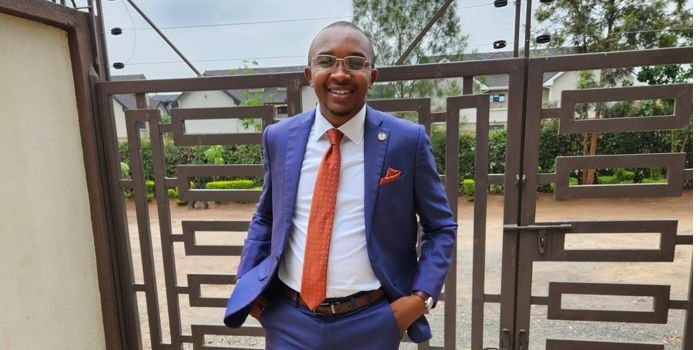
Just weeks after launching a bold political manifesto and founding his own political party, activist Morara Kebaso has announced he is quitting politics altogether.
In a bombshell post shared on X (formerly Twitter) on Monday, June 23, the leader of the Injection of National Justice, Economic and Civic Transformation (INJECT) Party declared that he was walking away from the political spotlight. His reason? The relentless scrutiny, criticism, and personal toll of public life.
"I’ve finally left politics. Now I can live my life, run my business, make my money, travel the world, see my friends, and visit a bar without worrying about being photographed. I’m free,” he wrote.
Kebaso’s political journey was as meteoric as it was chaotic. He first rose to national attention during the anti-Finance Bill protests in 2024, where he became a symbol of Gen Z activism and public accountability. Unlike traditional politicians, he took to the road literally touring the country to expose stalled or abandoned government projects, some dating back to the Uhuru Kenyatta era.
His grassroots approach earned widespread support. Crowdfunded by ordinary Kenyans and hailed as the voice of a new political generation, Morara shook the establishment enough that State House spokesperson Hussein Mohammed was compelled to respond publicly to his allegations.
But while the activist's star was rising, so were the cracks in his public image.
Trouble began when Morara was assaulted at the Bomas of Kenya while attending a public participation hearing on the impeachment of former Deputy President Rigathi Gachagua. The attack left him visibly shaken, and fears for his safety became more pronounced.
Things worsened when the government reportedly went after him over unpaid taxes. This was followed by frequent online appeals for financial support from his followers appeals that drew sharp criticism and raised questions about transparency and sustainability.
In March 2025, he announced that INJECT had joined the opposition coalition, a move seen by some as politically strategic but by others, as opportunistic. Then, a photo of Morara with figures linked to the Kenya Kwanza government surfaced, triggering online accusations that he was secretly working with the very system he claimed to fight.
"Nobody can judge me for dancing the ‘wrong’ way or smiling the ‘wrong’ way," Morara said in his exit statement. "I don’t need security. I can drive myself. I no longer have to show up for TV interviews only to be misquoted."
Morara Kebaso’s rise and fall highlights the high-stakes nature of modern political activism in Kenya—especially when it plays out online. Revered by many as a fearless whistleblower, loathed by others for what they saw as theatrical populism, his short-lived career reveals the thin line between influence and overexposure.
His announcement has stirred fresh debate: Is Kenya’s political environment too hostile for independent voices? Or was Morara simply unprepared for the weight of political leadership?
For now, Morara says he is choosing freedom over fame. Whether this is the end of his political story or just a pause remains to be seen.