
13 June 2025
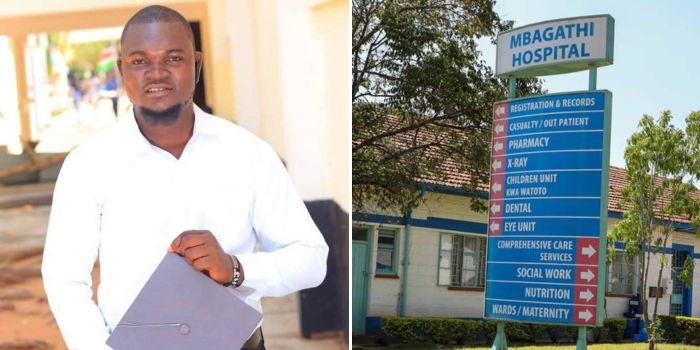
The tragic death of Albert Ojwang a respected teacher and social media influencer has taken a darker and more troubling turn, following the release of a report from Mbagathi Hospital that contradicts the official police narrative. The report reveals that Ojwang was already dead when he arrived at the hospital, raising alarming questions about the events leading up to his demise.
According to hospital records, Ojwang’s body was brought in at 2:00 AM on Sunday morning. This starkly contrasts with earlier statements from police officials, who claimed that he was rushed to the hospital for emergency care at 1:39 AM. The hospital staff, however, have confirmed that there was no chance of revival, and that he had been dead well before arrival.
This 21-minute discrepancy may appear minor at first glance, but it carries major implications. Combined with medical observations, it suggests a possible misrepresentation or even cover-up by law enforcement.
Mbagathi Hospital's report paints a horrific picture of Ojwang’s physical state:
- His face was severely swollen
- Bruises covered his limbs and torso
- He was bleeding profusely from the back of his head, mouth, and eyes
- A deep cut was identified in the parieto-occipital region of the skull — an area often injured during violent head trauma
Nurses described his condition as clearly the result of a brutal assault, and not consistent with any self-inflicted injuries or typical accidental trauma.
Perhaps the most damning revelation is that Ojwang was transported not from a public place or home, but from Central Police Station. This directly contradicts earlier police claims that he collapsed and was taken for immediate care. The report suggests that Ojwang died in custody, and that his body was moved afterward an act that raises grave ethical and legal concerns.
The discovery of injuries consistent with prolonged physical abuse only adds to the suspicion that Ojwang may have been the victim of police brutality or extrajudicial punishment.
The nation’s response has been swift and loud. On Thursday, Nairobi ground to a halt as thousands of youth took to the streets, demanding justice for Ojwang. Businesses shut down. Protesters carried signs and chanted slogans, not just in memory of Ojwang, but as a call to end systemic abuse and impunity within Kenya's law enforcement.
For many, Ojwang’s death is not an isolated case, but part of a larger pattern of state violence and suppression particularly against young, vocal citizens.
Police IG Douglas Kanja is now under scrutiny to account for the timeline inconsistencies and provide a public explanation for how Ojwang ended up dead while in police custody.
Albert Ojwang’s death is more than a personal tragedy it is now a national reckoning. As evidence mounts and the truth comes to light, Kenyans are left demanding one simple but essential outcome: Justice.